Sunday, October 16, 2011

Laboratory Glassware: Beakers

Let’s start with one of the most common materials found on the Lab, a Beaker.

Beakers_Lab CHARACTERISTICS

A beaker is a cylindrical glass container, most have a small spout to help pouring. They can be found in many sizes.
The most common have 250 mL. of capacity, and as i said they are made of glass, mostly borosilicate glass (also called Pyrex), this material is very resistant to heat and makes it perfect for boiling substances.

Beaker_Chem
Besides the common capacity these Beakers can be found in capacities like: 50, 100, 150, 500, 1000 and 2000 mL. Every glassware on the lab has specifications on the side, such as Temperature of calibration.

USES

These beakers have many purposes and can be used for mixing, stirring, measuring or boiling substances.
Although its not recommended to use it to measure substances, because the student can incur in mistakes in this procedure and its better to use a Graduated Cylinder. This beakers have a rough scale that can go from 0-50-100 or bigger ranges, making them not practical for measurement procedures.

beakers
 Be careful when boiling or heating, as i said be sure the Beaker is made of Borosilicate glass; one of the most common reasons for this material to break is the mistake of laying the Hot Beaker on a Cold surface such as the tiles on the lab.
 
More Laboratory Glassware 

Saturday, October 15, 2011

Chemistry Laboratory Glassware Material and Equipment

One of the main reasons I decided to study chemistry was the opportunity to be at a laboratory, experimenting with chemicals.
But soon i realized that i wasn't going to do any real science for some months, until i had learnt all the basics for Laboratory Experiments, that is safety rules and everything about the Lab Materials.
At first i was disappointed, i hate 100% theory lessons or have to learn a bunch of long rules, but years later after some accidents that I've had on the lab, I can assure you they are VERY important and essential.
Chemistry_glassware
You need to learn about EVERY material and equipment, how to handle and its purpose on the Lab. Here is the list of the most common materials that can be found on a Lab. I’ll be filling out all the information about them.


Of course there are many more, including the equipment necessary like thermometers, Bunsen burners, etc. Stay tuned for more information about each one.

Sunday, October 9, 2011

Fun way to learn the elements of the Periodic Table

Every kid needs to have a time out from studying, and i encourage you to do so. Check this video I found about Tom Lehrer and his song about the elements.


I'm currently memorizing it. For the first time I am enjoying learning all the elements.

Sunday, September 25, 2011

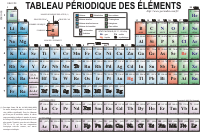
Periodic Table Review: Periodni.com


I’ve been getting a lot of feedback about the Printable Periodic Tables, so I'm going to start talking about the features of each Table and this might help some to decide which is the best for your needs.

Today I'm starting with the modified Table from www.periodni.com by Aditya Vardhan.

Source: Modified table from http://www.periodni.com by Aditya Vardhan
If you want the original visit www.periodni.com, or download it from here.

Features

This a table made for students starting to learn chemistry, the info that provides is the most Basic information:
  • Name of Element
  • Symbol
  • Atomic Mass
  • Atomic Number


Don’t ever get a table that doesn’t have these the Groups and Periods or a proper Reference box.


This modified table is very colorful but this is not for esthetic purposes, what i like about this table is that every color is for a type of element, as you can see on the reference box.

This is very helpful for learning and recognizing families of elements, and therefore knowing a bit more about which elements have similar properties.

A reference about the Standard (25ºC , 1 atm) state of the element is a must in every table and this one isn't an exception.
The resolution of this table is 1078x736 and its enough to print it and have a good Periodic Table; if you want to get it just click on the image below and save the picture.
Source: Modified table from http://www.periodni.com by Aditya Vardhan

Friday, September 16, 2011

Atomic Bonding Types

Depending on the elements that bind together, there are differences between each atomic bond. Let’s use my rule about atoms wanting to look like noble gases.

methane_bonding
Source: www.beechmontcrest.com
What better way to learn this but with an example: Let’s take the Oxygen, as you see on your Periodic Table, oxygen has 6 electrons on the last Shell (if you don't know where to get this info check the link), therefore it needs 2 more electrons to look like Neon and would be looking for atoms that can share the 2 electrons with him, that could be 2 atoms with 1 electron to share like Hydrogen, this will produce WATER: (images are just a way to represent how atoms share electrons)
water_bonding
Source: www.bbc.co.uk/schools
Or Calcium that has 2 electrons to share forming Calcium Oxide. Calcium_Oxide_bonding Depending on the Electronegativy of the Atoms involved on the bonding process, there are 2 types of Bonds:
  • Covalent Bond: there are 2 types, the Pure and the Polar
        Pure Covalent Bond: when the difference of the electronegativities of the atoms is between 0 and 0.3
        Polar Covalent Bond: when the difference is in the range of 0.3 and 1.7
  • Metallic Bond: This is more like a Pure Covalent Bond between 2 metal elements
  • Ionic Bond: when the difference is more than 1.7

Thursday, September 15, 2011

Chemical Reactions

A chemical Reaction can be described as a process where elements or compounds are transformed. Don’t confuse a chemical reaction with a physical reaction, where the only changes that happen are physical.

To avoid confusion, some of the main physical properties are Temperature, Aggregation State, Crystalline structure. For example let’s see how Diamonds are formed, for those who don’t know a diamond is made of Carbon.

carbon-mineral
Carbon
diamond
Diamond
This was just a physical change, on the crystalline structure of the atom and is not considered a chemical reaction

In a chemical reaction a chemical change must occur, this is that atomic bonds must be formed or broken, like the rust on an old car, this is the Iron(Fe) exposed to Oxygen (O2) forms an Oxide commonly called as rust.
220px-Rust03102006

The atoms or compounds that are initially involved on a chemical reaction are called REAGENTS and the atoms or molecules resulting of the chemical changes are called PRODUCTS.

Tuesday, September 13, 2011

Atomic Bonding Introduction

There are many ways that Atomic Bonds can be described or defined, many scientists use their own comprehension to define on their own way the Atomic Bonds.
There are many types of Atomic Bonds, depending on which atoms are bonded together and under what circumstances.

Compunds_Bonding
The concept of Chemical Reaction states that an Reaction is considered chemical when 1 or more bonds are formed or broken, very different to Physical Reactions where the only changes that occur are physical properties such as aggregation state or crystalline structure.To be honest i couldn't understand how Atomic Bonds worked on High school and i only did when i was on the University.

ice_melting
Source: www.uniongas.com


For example, Ice melting is a Physical Reaction where water just changes from a solid state to a liquid state.


Most of the elements follow a certain “rule” as i like to call it, they are jealous  of the Noble Gases (I'm not kidding), elements want to look like noble gases because they are stable and non-reactive (is normal conditions).

What’s that special characteristic of noble gases that makes everyone wanting look like them? They have their last Shell FULL, that’s it; they have 8 electrons on the last Shell making them unable to react with other elements (this rule does not apply to all elements; some are weird and hard to understand).

Thursday, September 1, 2011

Cooking? Think you should know this

Every cook in the world is making science, mixing compounds, taking substances to a state where its properties modify.
cooking
Pic Source: http://oodlelinks.com/Cooking.php
Even in the simplest task at home we are doing a little bit of science, when we are making Coffee, for example before  going out to work. We are using an extraction method where Hot water extracts compounds from a solid mixture.
coffee
Pic Source: http://willows95988.typepad.com/tongue_cheek/2008/01/index.html
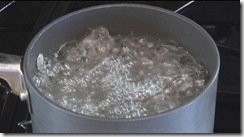
But how do we get that Hot water? we boil it right? Did you know that depending on where you live, the time you spend doing this simple procedure of boiling water is different? this is considering that other factors such as Heat source or amount of water are the same. There is another IMPORTANT factor that influences on the simple everyday task of boiling water.
Boiling Water
Pic Source: http://lifeslessons-lisa.blogspot.com/2010/11/cooking-sites-and-funny-recipes.html
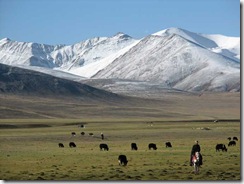
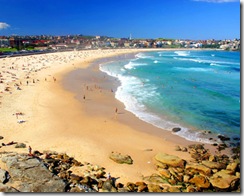
This factor is your city’s altitude or elevation; as many of you can tell, cities with low altitudes have, in the most cases, a tropical weather and those with high altitude have the tendency to be cold. A clear example would be that at the beach you are at sea level (Zero Altitude) but in the Tibet you are above sea level (around 5000 m. or 16000 ft.).
australia-bondi-beach
Pic Source: http://www.destination360.com/australia-south-pacific/australia/sydney/bondi-beach
Tibet3
Pic Source: http://www.creighton.edu/ccas/asianworldcenter/publiclecturesandforums/asianethicsforum/index.php
But this is the weird fact, where do you think it takes longer to boil water? some would say that in a hot environment boiling water would take less time than in a Cold freezing weather, well if you think so then you are wrong.
It is true that the environment would have an effect on how quickly you heat up the water, but this isn't the main factor.

I'm hoping some of you have learned this on school if not i would be very disappointed with your Teachers ^^ , but like i always say it’s never too late to learn new stuff.
Let’s explain first, what does it mean to boil water. The boiling point of ANY substance can be defined like this: “The boiling Point of a substance or element is a temperature where the vapor pressure of the liquid equals the atmospheric pressure in that location”. 

Vapor Pressure

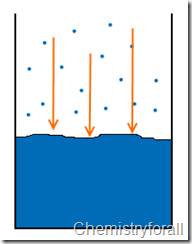
What happens when you boil water, It’s nothing geek but take a look for a moment what happens when you start heating water, you see that there is vapor that starts raising up right?, well as the temperature of ANY liquid substance raises this vapor increases.vapor pressure Did you know that a liquid substance constantly evaporates? it is true, and vapor pressure is the pressure of the gas phase over the liquid phase at any given temperature.

Atmospheric Pressure

What is Pressure? Pressure is the amount of force per area unit.
The atmospheric pressure can be explained as the amount of Air mass that is above a certain location.atmosphere So the lower your location altitude, the higher is the mass of air above you. and likewise, the higher your location altitude there is less amount of mass over your head therefore the atmospheric Pressure over you is lower than lower altitudes.

This means that as you start heating up water the Vapor pressure increases and HAS to be equal to the atmospheric pressure of your location to hit the boiling point, if the atmospheric pressure is lower than sea level (as a reference sea level atmospheric pressure is around 14.7 psi or 1 Bar or 1 atm., water at this pressure boils at 100ºC or 212ºF) it would take less time to reach that pressure.

  • 0 m. (0 ft.) sea level -----> 100ºC  (212 ºF)  (Reference)
  • 2500 m. (8400 ft.) my city -----> around 92ºC (197 ºC) , Here boiling water would take less time than sea level
by simple logic at higher altitudes like the Tibet (around 5000 m. or 16000 ft.) even if it is a cold place, water would take less time to boil.

I'm not taking in consideration that the main purpose of boiling water is to get rid of any kind of microorganism that could have contaminated the water and could give you some sort of disease. In this places it is highly advised even though the water has already boiled to leave it boiling for a few seconds more to be sure all bacteria has been killed.

And as many have noticed already i got a new domain with the help of a friend, hopefully in some time and with some extra money i will get a website hosting service to bring you better content. Stay tuned :)


^ Scroll to Top