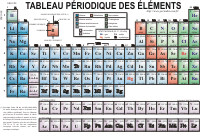
Sunday, August 28, 2011

Petroleum Industry

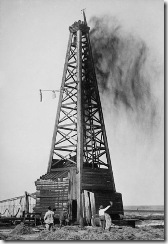
Petroleum Industry started around 1950, with the first exploration and extraction of this natural resource.Oldtimeextraction The whole Petroleum industry can be described in 3 streams or parts. The Upstream that refers to the exploration and discovery of Petroleum and Gas Sources.
The Midstream that refers to the small portion of the industry that takes care of the handling, storing and transportation of Petroleum and Gas.
And the Downstream, that is commonly generalized as “Petroleum Industry”, that includes the refining of Crude Oil or Petroleum and Gas.

All the Petroleum extracted is transported to a Process Plant where it is refined into other products such as Gasoline, Diesel Oil, Kerosene, Asphalt and others.oil-refineryThrough the ages we have relied our lives on many energy resources, Petroleum is one of those, mainly for the wide products there can be extracted from it. There are many Oil companies that manage all the Crude Oil market, therefore they control the sub products market aswell.

Many countries have based their economy on the exploration and extraction of Petroleum, spending millions of dollars on it. The technology used on these operations is not cheap, many countries just extract the Crude Oil and then export it to another country with the capabilities to process it. This is when environmental disasters happen, you must have probably heard about Oil disaster on the sea.
OilSpill 
Petroleum Processing
It’s all in the carbons, that’s what i always say to explain how Petroleum processing works.
Petroleum is a mixture of several different compounds, all with 1 similar characteristic: They all have Carbons; the more carbons the molecule has, the heavier it is.

Compounds on Petroleum have from 1 carbon atom to probably around 20 carbon atoms, this composition depends on the Source of the Petroleum, as in some parts of the world the oil could be heavy or light.

This difference on the weight of the molecules has a direct effect on its boiling point, The boiling point is where the molecule changes from a liquid state to a gas state.
 This principle is used on huge distillation columns, this is why if you see an oil industry, they have tall columns.IndustryPetr These columns are heated on the bottom and as you go higher the temperature decreases, so depending on the height you can extract different compounds of the Oil:
Petroleum refining Heavier components such as lubricants, asphalt, kerosene are extracted at the bottom and lighter components like gasoline, propane from the top. This is just a rough example on how Petroleum is refined, it takes several processes and many distillation columns to achieve the final product, also the temperatures and the composition (#of Carbons) are not accurate as some of the final products still have some percentage of some other compounds.

Hope you enjoyed it and if you want more information feel free to Contact Us.

Tuesday, August 23, 2011

Acids Nomenclature

Let’s deal with these compounds now, many must have heard about acids at some point, on a movie, or in jokes; but everything points to their destructive capability.
The following acids are Oxacids, as they have oxygen in their structure; there is another kind of acids, the hydroacids that only have the Non-Metal and the Hydrogen.

Acids are formed when Non-Metal Oxides (also known as Anhydrides) react with Water.
SO3      +       H2O     ------>      H2SO4
Acid formulas are a bit tricky to make, but with a little practice it becomes very easy.
First as usual, I'm going to start with the formula writing structure:

H Non-Metal O

As you can see the Hydrogen comes first, then the No-Metal and the Oxygen is last.
Most of the Acids have only subscripts on the Hydrogen and Oxygen but some rare have it on the No-Metal aswell.

HA MetalC OB

There are many ways to figure out the subscripts; I'm going to teach you the easiest one in my opinion.
Write down the elements in the correct order. (2 examples)

H S O                                              H Cl O
  
Now check the valence of the No-Metal you are going to use, is it an EVEN or ODD number. (For valences check this page: Valences)
  • If it is EVEN ---->the HYDROGEN’s SUBSCRIPT is 2
  • If it is ODD ---->the HYDROGEN’s SUBSCRIPT is 1
            
S ---> Ox # = +2 +4 +6
(Let’s do the formula for the valence +4)

H2 S O  

Cl ---> Ox # = +1 +3 +5 +7
(Let’s do the formula for the valence +3)
H1Cl O  
There's no need to write the subscript if its 1

Now here is the trick part: SUM the OXIDATION NUMBER of the Non-Metal with the HYDROGEN SUBSCRIPT
  
Now take this number and divide it by 2, this is now the OXYGEN’s SUBSCRIPT; weird isn't it? but this is the best way to do it.


ACIDS NOMENCLATURE

There are 3 ways of naming Acids.
  • TRADITIONAL nomenclature
  • IUPAC nomenclature
  • STOCK nomenclature
IUPAC and STOCK nomenclature in acids is not used frequently, as it is a bit difficult and general chemical compound markets in the most part use only the TRADITIONAL nomenclature. 

TRADITIONAL NOMENCLATURE
 
You need to learn a little system of prefixes and suffixes (for the oxidation numbers)
Hip----ous
--ous
---ic
Per-----ic

+2
+4
+6
+1
+3
+5
+7
Note that the suffix does not depend on the number but on how many valences the element has.

EXAMPLE

Name this Acid

HClO4

Remember how to make Acid formulas? Now we just need to go backwards to figure out which oxidation number the metal is using. Take the oxygen subscript, multiply it by 2 and subtract the Hydrogen subscript.

Now that we know which it is, let’s find the correct suffix to use. It has 4 oxidation numbers:

+1 ----> Hip-----ous
+3 ----> -ous
+5 ----> -ic
+7 ----> Per------ic

Traditional nomenclature has this writing structure:

[ELEMENT NAME][SUFFIX] Acid

So we just need to fill the name of the Non-metal and the suffix

PerChloric Acid

Coming up! Acids Exercises

Friday, August 19, 2011

Metal and Non Metal Valences Page

A very important part of learning the basics of Inorganic Nomenclature is learn the valences properly, but this is a slow process so it doesn't matter if you don't know them by memory the first week.

So for those needing that little extra help when doing their Nomenclature Exercises here i have a table with the most common elements and their valences, Enjoy.

Sunday, August 7, 2011

Energy Sources: Petroleum

Have you ever wondered where Gasoline comes from? You use it everyday on your car but how much do you know about its origin and processing.
Gas Petroleum, or Oil how it is called in some countries, is a liquid consisting of many organic compounds, these compounds have various molecular structures and were formed beneath the Earth’s surface.
Million years ago plants and animals in the oceans died and got trapped under several layers of soil and sand; Time, pressure and Heat turned these rests of animals and plants into oil.
formation Oil Oil is a nonrenewable energy source; it took millions of years to make and seconds to be consumed.

Origin

On Earth there are Carbon-based lifeforms, that includes us, animals and plants; following the Lavoisier Law of Mass conservation, that mass cannot be destroyed but only TRANSFORMED, all the rests of animals and plants trapped under layers and layers of soil and sand suffered changes.
The real origin of oil is uncertain, there are only theories about how it formed.
My favorite is the one that says that tiny animals and plants started to deposit at the bottom of the oceans.
formation1 This decomposed matter was eventually covered by layers of sand.
formation2 The conditions of pressure and heat, added to the lack of oxygen worked together to promote the formation of liquid petroleum and gas.
Formation3

Composition

The composition of Oil is different depending on the source, that is where it was extracted from. Usually it contains around 84% of Carbon and 11% of Hydrogen, the rest are mostly Sulfur and Nitrogen.
There are 4 major groups that are present on Petroleum, depending on their Molecular Structure.

Paraffins
Paraffins are Organic Molecules consisting on C-H linked together by simple bonds, all are lineal and can be branched.
paraffins

Olefins
Olefins have the same structure than Paraffins, but C-H are linked together by double bonds.
olefins

Naphthenes
These organic compounds have C-C and C-H bonds, but the structure have simple bond rings,  mostly
naphthenes

Aromatics
Aromatic compounds are similar as Naphthenes, but the only difference is that they have double bond rings, and rings are made out of 6 carbons.
aromatics 
There are other organic compounds that have Nitrogen and Sulfur within their structure.
Fuels and many other products are extracted from this complicated mixture, along with some Gases like methane that are dissolved in the mix.

COMING NEXT!! Petroleum Industry

Saturday, August 6, 2011

Hydroxides Exercises

Let’s get you on that practice side now.

Name these hydroxides with all 3 nomenclatures:

NaOH

Sodium has a valence of +1

Sodium Hydroxide                <--- Traditional
Sodium MonoHydroxide       <--- IUPAC
Sodium(I) Hydroxide             <--- Stock

Ca(OH)2

Calcium has a valence of +2.

Calcium Hydroxide               <--- Traditional
Calcium diHydroxide            <--- IUPAC
Calcium(II) Hydroxide          <--- Stock

Al(OH)3

Aluminum has a valence of +3

Aluminum Hydroxide                  <--- Traditional
Aluminum TriHydroxide              <--- IUPAC
Aluminum (III) Hydroxide           <--- Stock

Pb(OH)4

Lead has a valence of +4 in this hydroxide.

Plumbic Hydroxide                   <--- Traditional
Lead tetraHydroxide                <--- IUPAC
Lead(IV) Hydroxide                 <--- Stock

CuOH

Copper has a valence of +1

Cuprous Hydroxide              <--- Traditional
Copper DiHydroxide           <--- IUPAC
Copper(II) Hydroxide          <--- Stock


Coming up! Acids Nomenclature

Friday, July 29, 2011

Hydroxides Nomenclature

Hydroxides are a group of compounds not well known in general, although you might know them by their commercial name in some cases.

Copper Hydroxide
                
Sodium Hydroxide
 
Some Hydroxides are present on drain cleaners; some are used on making soap and detergents.
Hydroxides are formed when Metal Oxides react with Water.

CaO + H2O ---> Ca(OH)2

Hydroxides have this writing structure:

Metal OH

And like with Oxides we just need to figure out the subscripts A,B.

MetalA (OH)B

For Hydroxides the (OH) radical works with -1. Now you write the oxidation number of the metal and the valence of the OH radical.
Now you just have to SWITCH the numbers like this and you are done, know you know how to make Hydroxides. Metal oxidation numbers can be found here
Never write the subscript of the OH radical WITHOUT ( ).
HYDROXIDE NOMENCLATURE

There are 3 ways of naming Hydroxides.
  • TRADITIONAL nomenclature
  • IUPAC nomenclature
  • STOCK nomenclature

TRADITIONAL NOMENCLATURE

You need to learn a little system of prefixes and suffixes (for the oxidation numbers)
  • If it only has 1 oxidation number there isn’t a suffix to use, some people use the –ic suffix.
  • If it has 2, the higher is –ic and the lower is –ous.
-ous
-ic
+2
+3
+1
+2
Note that the suffix does not depend on the number but on how many valences the element has. I’ve seen people making the mistake to think that +2 is always –ous or always –ic.

EXAMPLE

Name this Hydroxide

Fe(OH)3

Remember how to make hydroxide formulas? Now we just need to go backwards to figure out which oxidation number the metal is using.
Now that we know which it is, let’s find the correct suffix to use. It has 1 oxidation numbers:

+2 ----> -ous

+3 ----> -ic

Traditional nomenclature has this writing structure:

[ELEMENT NAME][SUFFIX] Hydroxide

So we just need to fill the name of the metal and the suffix

Ferric Hydroxide

Be careful with some element names, some aren’t use in nomenclature, such as IRON (Fe): so it wouldn’t be IRONIC (heheh), but FERRIC.

IUPAC NOMENCLATURE

This one is the easiest in my opinion, it is also called “systematic”; you just need to learn these prefixes:

Number
Prefix
1
mono-
2
di-
3
tri-
4
tetra-
5
penta-
6
hexa-
7
hepta-
8
octa-
9
nona-
10
deca-
EXAMPLE:

Fe(OH)3

You just need to use the prefixes to name the element according of the subscripts.
 In this case the structure of IUPAC nomenclature is

[PREFIX][ELEMENT NAME]  [PREFIX]Hydroxide

So this is the name of the oxide according to IUPAC Nomenclature (if the metal has a subscript of one we don’t use MONO, we only use MONO if the radical OH has 1 as subscript):

Iron triHydroxide

STOCK NOMENCLATURE

This is an easy nomenclature as well; you don’t have to know anything else but the oxidation numbers of the elements.

EXAMPLE:

Fe(OH)3

First step is to figure out the oxidation number of the metal:
 The structure of STOCK nomenclature is

[ELEMENT NAME][OX. NUMBER]     Hydroxide

The oxidation number of the metal has to be written in Roman numbers (I, II, III, IV, etc.).
This is the name according to Stock Nomenclature:

Iron(III) Hydroxide

Be careful with writing a space between the name and the Roman number, there isn't one.

Coming up! Hydroxides Exercises

Wednesday, July 27, 2011

How to use your Periodic Table (Advanced)

If you want some basic information about the Periodic Table be sure to check here: How to use your Periodic Table (Basic)

I’ve been behind with my post about Hydroxides Nomenclature, but it’s coming soon; for that I apologize.

Let’s go beyond now, like I said that piece of paper called a Periodic Table gives a lot of useful information for your chemist needs, if you don’t have one yet get one Get your own Printable Periodic Table.

I’ve always wanted to know how to make equations and how to predict what reactions could happen with elements. Now with the help of some basic knowledge about Nomenclature and our Periodic Table we can.
Let’s check some properties that can be predicted with our Table

ATOMIC RADIUS

Imagine the atom like a Peach, the seed in the center would be the nucleus (where protons and neutrons are) and the rest the electrons around it.
The more neutrons, electrons and protons the atom has, the bigger it is. But it’s a little more complicated than that, because there are other properties that come in place when we want to figure out the Radius.

The protons, neutrons and electrons increase this way on the table.
So intuitively you could say that the radius would increase the same way, but the rule is different, mostly because electronegativity plays an important part, higher electronegativity means smaller atom.
The atomic radius increases this way instead.
So basically you can predict which atom is bigger.

ELECTRONEGATIVITY

Electronegativity is the property of atoms to attract/draw electrons into the nucleus, basically is the force of protons(+) attracting electrons(-) closer to the nucleus.
While the atom increases its size with the number of particles, the attraction force makes the electrons layer thinner, it’s like if the peach would have bigger seed but the fruit part is thin.
The electronegativity increases in this way.
ELECTRONS ON THE LAST SHELL

This could be one of the most important information you can get from the table, to understand it you need to know that MOST elements follow a certain rule, they are jealous of the Noble Gases, yeah, not kidding, elements want to look like noble gases because they are stable and non-reactive (is normal conditions).
What’s that special characteristic of noble gases that makes everyone wanting look like them? They have their last Shell FULL, that’s it; they have 8 electrons on the last Shell making them unable to react with other elements (this rule does not apply to all elements; some are weird and hard to understand).

You can find that number here; elements on the same group have the same number of last Shell electrons (they are on Roman numbers)
But how would elements would try to look like noble gases??? The only way is losing or gaining electrons, but this is only a fail attempt that gases laugh at, it works though.
Electrons increase this way on the table, and elements are listed and must be read this way.
Each time you move 1 square to the right the number of electrons increases by 1, elements will try to look like the noble gas on the same horizontal line.
So Oxygen would try to look like Neon
Or Bromine like Krypton
These elements must gain electrons to gain the “noble status”, oxygen would need to gain 2 or Bromine just 1.

Elements on this side have a problem, the amount of electrons they need to gain is too big, and their electronegativy is low (Check above) so they don’t have enough “strength” to attract electrons.
So they must do it the other way, they will have to try looking like the noble gas of the horizontal line above of them and that means losing electrons.
Sodium would need to lose 1 electron to look like Neon
Calcium gives away 2 to look like Argon
This group here is similar to calcium or sodium group, although the rule of # of electrons on last shell is kinda tricky, I still can’t understand them well but they lose electrons.
REACTIVITY

So basically you have 2 kinds of elements in reactions, some lose electrons and some are willing to take them, this give and take is what makes chemical reactions happen.
You can predict most of Chemical reactions but like I said, you will need the help of nomenclature to fully understand them
Like Oxides: that is a compound made of Oxygen and a Metal or Non-Metal.
Or Hydroxides that have Oxygen, Hydrogen and a Metal
Or Acids that have Oxygen, Hydrogen and a Non-Metal.
Chemical reactions are a little more complicated than just putting elements together, like I said some lose electrons, some gain them, and some SHARE them, most of the compounds are made of atoms that have shared electrons with other atoms to fulfill that need to become stable.

Coming Up!! Hydroxides Nomenclature (This time for real)

Wednesday, July 13, 2011

Get your own Printable Periodic Table

I’ve search around and come across some pretty cool periodic tables, for those who haven’t got one yet, you can now get a nice printable version.
These Tables can be printed out on a large poster for your wall or for the science lab wall, i'm thinking on printing some on T-shirts.

Disclaimer: I haven’t created any of the following tables; all rights are retained by the original authors of them

                                                                                                                                                                                                                                                                      
  • www.periodni.com is a nice source of printable periodic tables (in different LANGUAGES!!) among other material, give them a visit and they might fill your needs.
This is what you can find there.

 
This is a periodic table with basic rules for balancing chemical equations and some constants, it has a ruler aswell.


A nice black and white version of the periodic table with basic information; the atomic weights of the elements are rounded to 5 significant figures.


This is a printable color version; the colors denote the element groups.


For those who want a Periodic Table as desktop feel free to use this one (they have it in other resolutions), to get it just save this image directly.


  •  www.elementsdatabase.com has 2 versions of a basic Periodic Table, very useful for learning the basic characteristics of chemical elements.

Download
Download


  • Mr. Allan is a High school Science teacher; He made 5 of the following tables the rest were gathered by him from different sources. This is his site where you can find the rest of them: http://www.sciencegeek.net
  • These 2 tables are my personal favorite, Dr. Jon Wittwer wanted to "create a table that would pack as much property data onto a single 8 1/2 x 11 sheet of paper as reasonably possible.", I love all the info you can get from it.


Download
Download
 Source: http://www.vertex42.com/ExcelTemplates/periodic-table-of-elements.html
  • These are some of Mr. Allan's creations.
 
Average molar masses are rounded to two decimal places. The table also includes electronegativity values. Element symbols are color coded (black = solid, red = gas, blue = liquid).
 

This a version that is color-coded by element classes, and includes the usual information, but also the atomic radius of each element.
Download


This is a similar version but also the electronegativity of each element.
Download


  • These tables were gathered by Mr. Allan

 
This is the periodic table used with the California Standardized Test in Chemistry. It has 2 sides and the back of the table includes equations and constants.


This table shows the ions formed by the elements. It also contains an excellent table of polyatomic ions. It is the product of Joel Weiner, who teaches at Evanston Township High School in Evanston.


A periodic table with color, from the Lawrence Berkeley Laboratory. Includes other useful data such as electron configuration, melting point, boiling point, oxidation states and more.
Download


The black and white version of the Lawrence Berkeley Lab Table
Download


Los Alamos Nuclear Lab provides colorful table. It has a noble-gas configuration notation for each element.
Download


This table is the black and white version of the Los Alamos periodic table.
Download


This table is produced by the Physics Lab at NIST, the National Institute of Standards and Technology. It has a very colorful background.


A good basic table from the New York Regents. This black and white table includes electron configurations.


Source: Find more at http://www.sciencegeek.net/tables/tables.shtml

Coming up next!!: Hydroxides Nomenclature


^ Scroll to Top